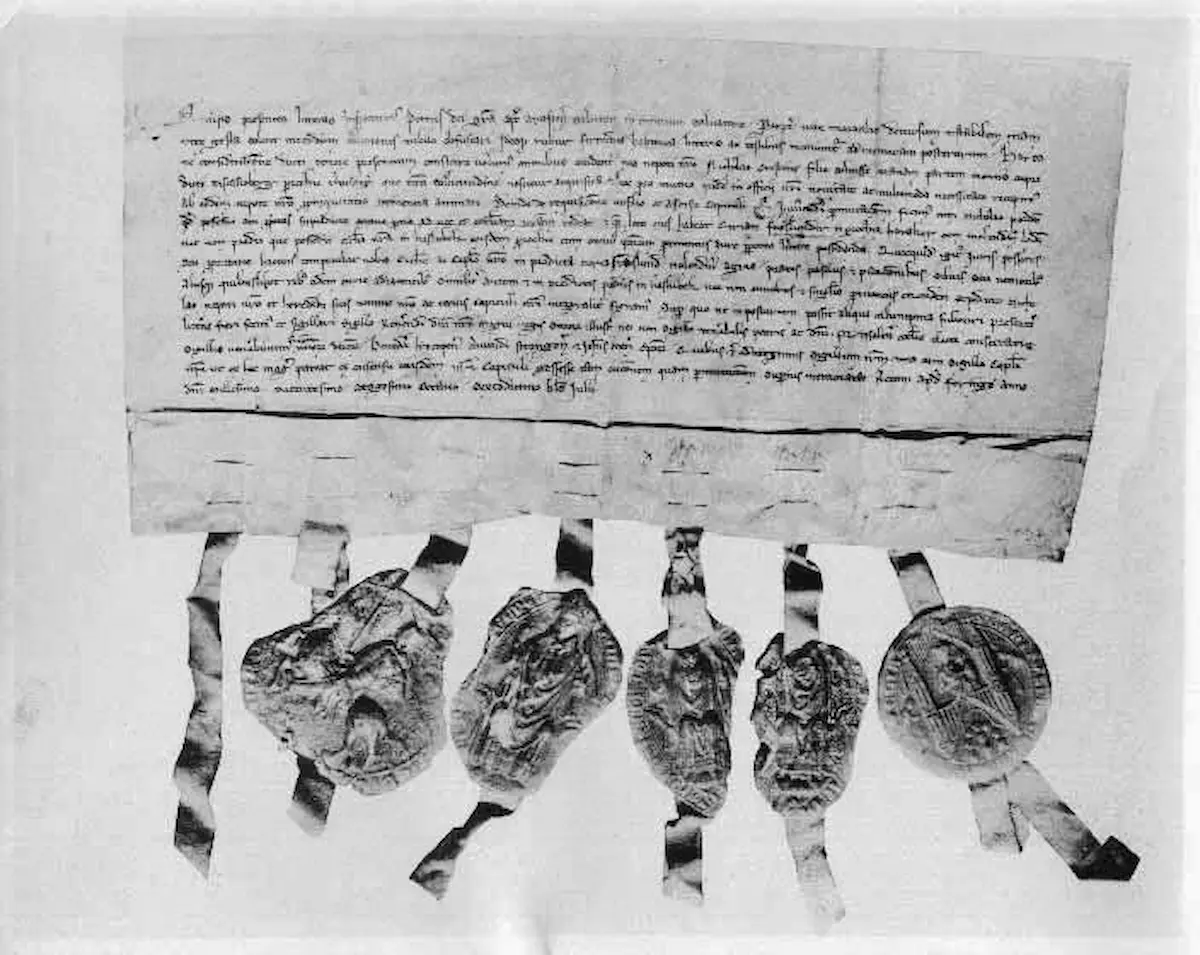
In an age when companies measure their history in decades, there is one that can trace its roots to the 13th century. Stora Kopparbergs Bergslags AB is considered the world's oldest corporation. The proof is a piece of parchment from 1288, kept at the National Archives in Stockholm.
A bishop and an eighth
In 1288, Bishop Peter (Petrus Elofsson) of Västerås drew up an exchange letter. In it, he transferred an eighth of the copper mountain, then called Tiskasjöberg, to his nephew Nicolaus Christineson. The bishop had acquired the share through his own efforts and it was transferred in exchange for a loan that Nicolaus had given the bishop upon his accession to the episcopal seat.
The letter was confirmed with seals by King Magnus Birgersson and eight bishops. It is the oldest surviving document about a Swedish mine and the oldest known share document in the world. Already at this time, work in the mine was conducted as a company where shares could be bought, sold and transferred.
Quarter-shares and mine assemblies
The shares in the mine were called fjärdeparter (quarter-shares) and were entered in special share registers. The mine owners (bergsmän) who held quarter-shares made collective decisions about how mining should be conducted, how profits should be distributed and what investments needed to be made. They had their own bergsting, a kind of shareholders' meeting, where important matters were decided.
The mountain's administration was managed by a mine bailiff (bergsfogde) and a council of fourteen mine owners, with their own laws and their own mining court. The organisation was remarkably democratic for its time and so well-functioning that it endured for centuries. While kingdoms fell and new great powers emerged, the mine owners of Falun continued to mine copper and trade their shares according to rules established as far back as the 13th century.
Royal recognition in 1347
Sixty years after Bishop Peter's exchange letter, the mining district received another decisive document. In 1347, King Magnus Eriksson issued a charter that formally confirmed the mining district's rights and organisation. It was a royal acknowledgement of the corporate structure that had already grown up.
From mining to major corporation
Stora Kopparberg continued to develop through the centuries, from copper mine to ironworks, forestry company and paper industry. The company eventually became Stora Enso, one of the world's largest forest industry companies.
But it all began with a piece of parchment, a mine and a group of mine owners who realised they could achieve more together than apart. It is a business idea that has held for more than 700 years.