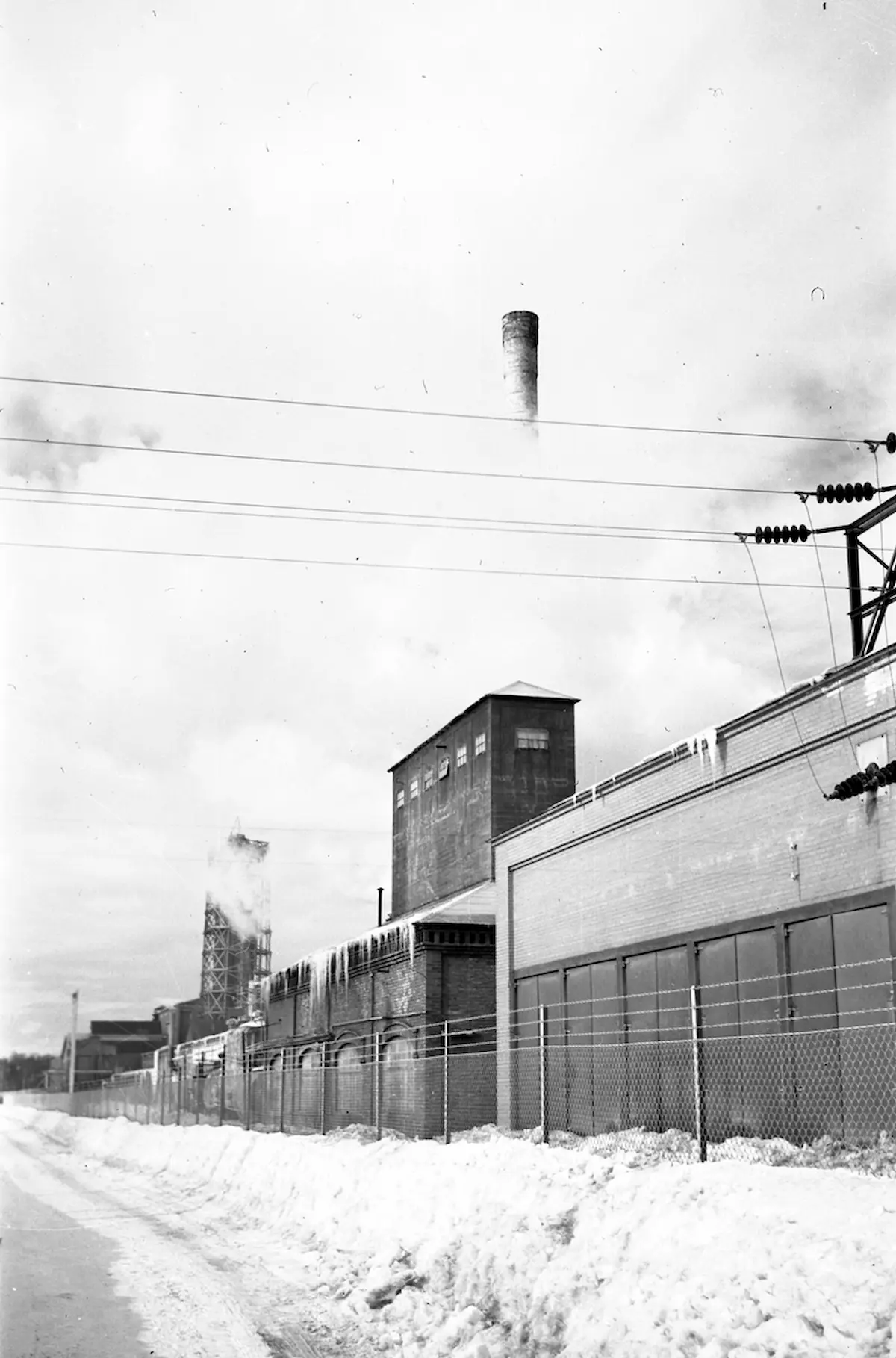
Today we almost take it for granted that large industrial companies have their own research environments. But at the beginning of the 20th century, it was far from obvious. When Stora Kopparberg established a laboratory at its operations in Skutskär in 1903, it was a pioneering venture, an early and remarkably far-sighted research environment in the Swedish cellulose industry.
Research close to production
The laboratory at Skutskär was from the outset closely tied to practical operations. The work was not about fundamental research in the academic sense, but about solving concrete problems in industry: how pulp quality could be improved, how processes could be made more efficient and how new products could be developed.
It was applied science, driven by the needs of production. But precisely for that reason, the investment proved so important. Stora Kopparberg recognised early on that systematic knowledge work could strengthen competitiveness and provide technical advantages.
A remarkably early step
At this time, such an approach was still unusual among many traditional industrial companies in Bergslagen. There, practical experience, craft skill and established methods long remained the most important foundation of knowledge. Stora Kopparberg was therefore ahead of its time when it chose to give research a clear place in its industrial operations.
The Skutskär laboratory thus became not merely a local function at the mill, but an expression of a larger shift: from experience-based production to a more systematic and scientifically oriented industrial culture.
From local laboratory to larger research environment
The experience from Skutskär contributed to research being gradually expanded on a larger scale. After the First World War, Stora Kopparberg took steps towards a more centralised research organisation and the work grew in both scope and ambition. What had begun as laboratory work close to the factory floor developed into a broader research operation with several disciplines.
Over time, the research came to encompass far more than cellulose processes. Within the group, work also addressed questions relating to paper qualities, chemical processes and metallurgy. This reflects how Stora Kopparberg was for a long period a company with operations across several industrial branches simultaneously.
STORA 32 and the research legacy
One of the most noted results came in the 1930s, when the company's researchers succeeded in producing the bleached sulphate pulp named STORA 32. It became a well-known name in the industry and a clear example of how purposeful industrial research could be translated into concrete results.
The Skutskär laboratory thus laid the foundation for a research tradition that lived on long after the initial pioneering period. From the early experiments in the mill environment grew a corporate culture where research, development and technical improvement became a natural part of operations.
Research continues
Although both the company and the industry have changed many times since 1903, that tradition lives on. Today, Stora Enso's research and development continues within the group's research operations, including at the company's research centre in Nacka.
This makes the story of the Skutskär laboratory greater than just a local episode in Swedish industrial history. It was the beginning of a long chain of industrial research, from the pulp mill on the coast to today's advanced development environments.