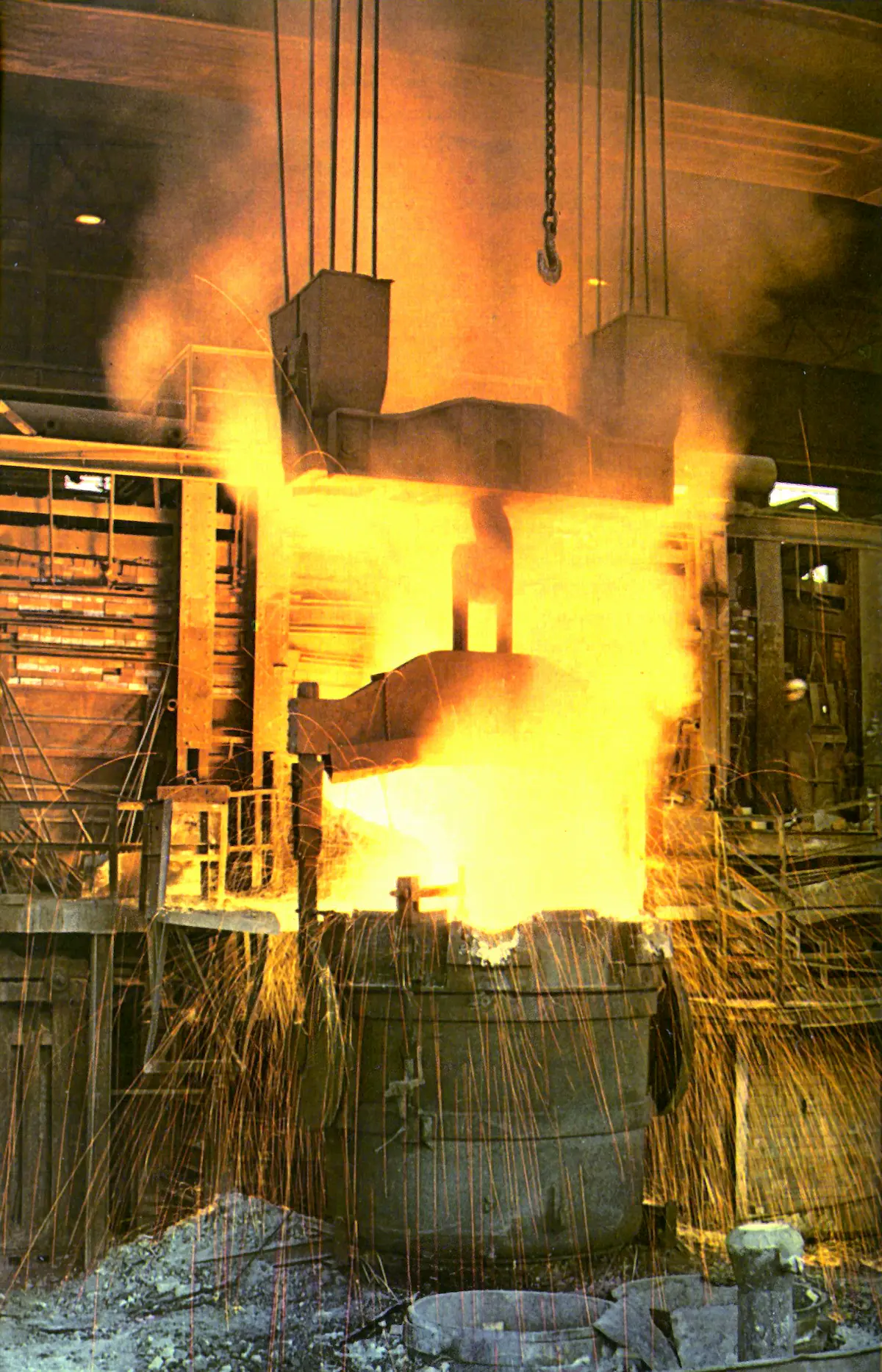
In the mid-1950s, at a time when Swedish industry was in full expansion, Stora Kopparberg presented something that made the steel industry sit up and take notice. An entirely new method for producing steel from pig iron using pure oxygen: the Kaldo process.
The problem that needed solving
Traditional steelmaking was energy-intensive and difficult to control with precision. Quality varied and the process generated large amounts of impurities. The researchers at Stora Kopparberg, particularly at the Domnarvet Ironworks, had long been working to find a better way.
The solution came through the use of pure oxygen in a rotating furnace. The oxygen reacted with the carbon in the iron, removing impurities with an efficiency that previous methods could not match. The result was cleaner steel of higher quality.
Kaldo, the name behind the method
The method took its name from Professor Bo Kalling and Domnarvet: Kal-Do. It was typical of the Swedish industrial culture of the time, an innovation born from collaboration between science and practice, between the laboratory and the factory floor.
The Kaldo process was not merely a technical achievement. It was proof that an old industrial company in Bergslagen could compete with the world's leading research institutions.
Part of a larger pattern
The Kaldo process was not an isolated event. It fitted into a pattern of long-term research and development that had characterised Stora Kopparberg since the Skutskär laboratory was founded in 1903. The company invested in knowledge and had the patience to wait for results, a strategy that paid off time and again.
Although the Kaldo process was eventually superseded by other methods, its significance endures as a reminder that innovation does not always come from Silicon Valley. Sometimes it comes from a steelworks on the Dal River.