Imagine living in Falun in the 1400s. There is no police. There is no healthcare. There is no authority to help you if you fall ill, get robbed or are summoned before the court. You are essentially on your own.
Unless you are a member of the guild.
Guild, not craft guild
The Guild of Saint George at Kopparberget was not a trade association. It was not a craft guild. Craft guilds belonged to the cities and were about regulating trades: how many shoemakers could operate, what steps you needed to take to become a master. All to keep prices up and competition down.
The guild was something different. It was a social fabric. A community you joined voluntarily, paid an entry fee to, and in return you received protection. If you fell ill, your guild brothers and sisters would care for you. If you became destitute, the guild would provide for you. If you died, the guild paid for your funeral and had masses read for your soul.
And yes, guild sisters. Unlike the craft guilds, guilds were open to both men and women. If you could pay the entry fee and were considered of good character, you were welcome. The preserved guild charter explicitly mentions both "guild brothers and guild sisters".
The medieval superstar saint
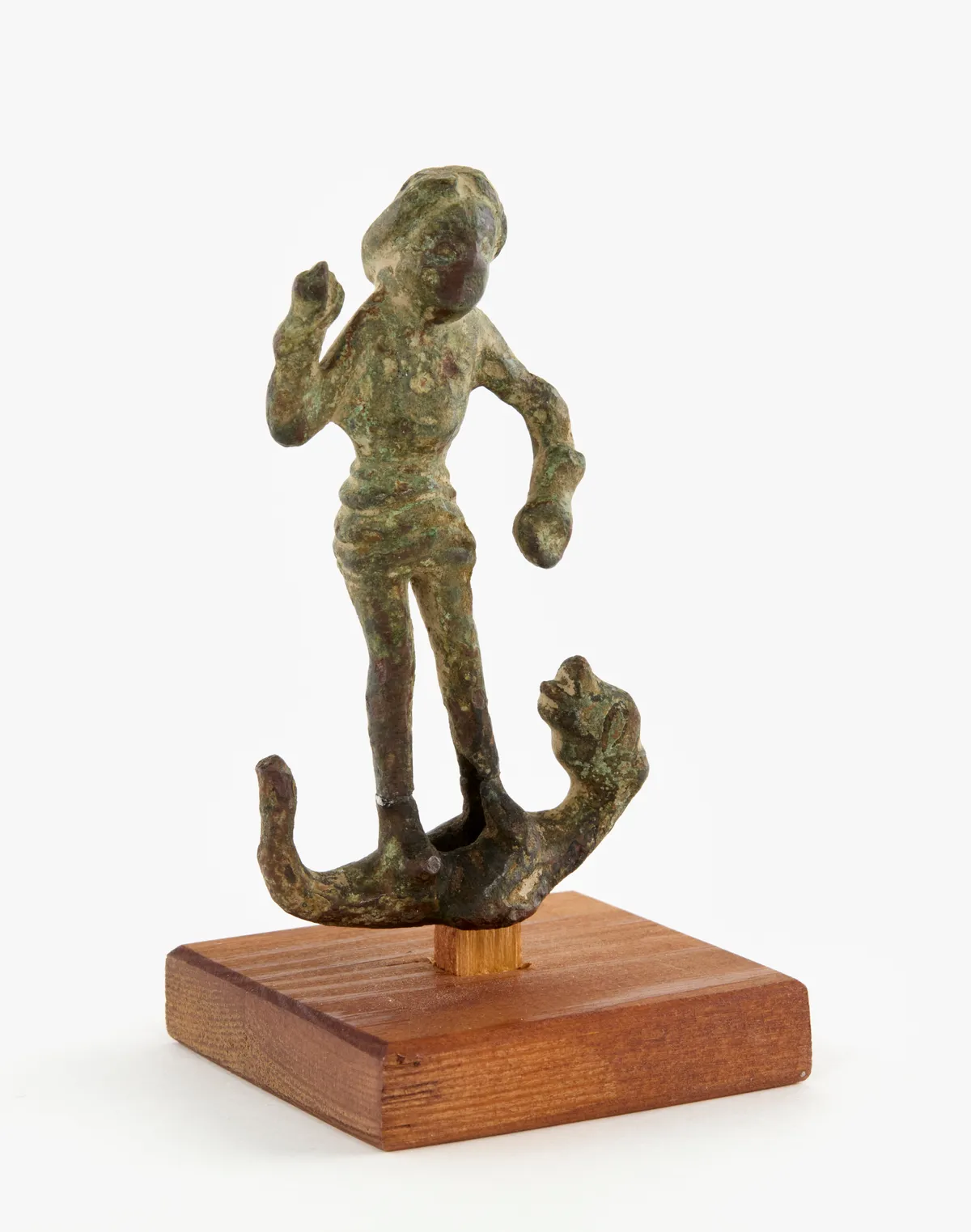
Why Saint George specifically? Örjan, Göran, George, Georg. The same saint, different names depending on where in Europe you find yourself. This was the undisputed favourite saint of the Middle Ages. The knight who slays the dragon, saves the princess, does it all in the name of God. A good story that worked everywhere.
In Sweden he took on an extra dimension. During the 1400s conflicts between Sweden and Denmark, George was used as outright propaganda. The famous sculpture in Storkyrkan in Stockholm depicts Saint George defeating the dragon. The most common interpretation: Sweden is the princess, the dragon is Denmark. If you look closely, the dragon bears a Danish flag.
Naming the guild at Kopparberget after the most popular saint of the Middle Ages was a safe bet. They chose the strongest brand available.
The most warlike guild we know of
What makes the guild charter from Kopparberget exceptional is its unusual focus on defence. Researchers have called it the most warlike of the guilds we know of from medieval Sweden.
It sounds extreme, but it makes sense when you consider who the members were. The mine operators at Kopparberget had money. They had employees. They could afford weapons and arm their people. The guild gave them a structure to practise parrot shooting and keep their weapons in order.
The charter states plainly that if a guild brother commits murder, the other brothers are obligated to help him flee. Not to hand him over. Not to bring him to justice. Flee. This was an organisation that chose loyalty to its own above most things.
At the same time, the charter devoted enormous effort to regulating internal conflicts. You were not allowed to summon a guild brother or sister before the public court. Disputes were to be resolved within the guild. The alderman, the chairman, had the right to pass judgement. And if you did not want to be elected alderman? You had to pay a fine and promise to accept next time you were asked. This suggests the job was not popular.
The fines tell more than you might think
The most entertaining part of the guild charter is the schedule of fines. It functions as a real-time record of what actually happened at the guild feasts.
Part of the entry fee and annual dues were paid in malt and hops, so the guild could brew beer. The feasts were therefore a central part of operations, and the charter makes clear what was expected.
Were you ill and could not attend? The guild sent beer to your home. You were not to miss the celebration just because you were bedridden.
But things went downhill fast. The official cup-bearer made rounds refilling glasses. Refused to let him pour? A fine. Perhaps you had finished drinking, but that did not matter.
Then it escalated. If you threw off your cloak or rolled up your sleeves, you were fined. (This was evidently a sign that a fight was brewing.) Striking a fellow brother or sister, naturally a fine. And then the serious offences: there was a sliding scale of fines depending on whether you urinated on the floor, on the walls, or in someone's shoe.
The shoe was the most expensive.
Why guilds disappeared
Gustav Vasa understood early on that the mine operators at Kopparberget were a power he could not ignore. This was precisely the organisation he needed for his rebellion against Denmark. He came here, won their support and gained his army.
But after the mine operators had helped him to the throne, the game changed. One or perhaps several uprisings later, Gustav Vasa had no interest in organisations at Kopparberget that could mobilise against him. The official reason for disbanding all guilds was convenient: they were Catholic customs, and Sweden had become Protestant in 1527.
The craft guilds were allowed to remain. They were economic associations without political potency. But the guilds disappeared.
By 1539, the guild hall at Stora Kopparbergs kyrka was gone. It happened quickly. Papers that existed were reused or discarded. All that survived was the guild charter, which today resides at the Royal Library. A single manuscript, preserved by pure chance.
A single manuscript
It is easy to overlook what that actually means. Everything we know about this association, which likely gathered most of the influential people at Kopparberget during the 1400s, comes principally from a single document.
We do not know how many members the guild had. We do not know exactly who belonged. We cannot read minutes or letters. We can only read the rules. And from those rules draw conclusions about what life actually looked like at Kopparberget during this period.
The guild hall was so large that church services were held there when the church could not accommodate everyone. That tells us something about how central (and large) it was. The charter dedicates page after page to regulating behaviour at feasts, protection in the event of crime and assistance in times of illness. That tells us something about what these people needed from one another.
In an era without institutions, they built their own.
This article is based on a lecture by Johanna Lindén Nybelius, museum educator at Falu Gruva, arranged by Föreningen Världsarvets Vänner (the World Heritage Friends Association).